Introduction
Server rack for AI data center, Artificial Intelligence (AI), machine learning, cloud computing, and edge computing are rapidly transforming the modern IT landscape. As organizations deploy more powerful servers and storage systems, the demand for high-density data centers continues to grow. While businesses often focus on servers, networking equipment, and software infrastructure, one critical component is frequently overlooked—the server rack.
Why AI Workloads Are Changing Data Center Infrastructure
AI applications require significantly more computing power than traditional workloads. Training AI models, processing large datasets, and running advanced analytics demand high-performance servers equipped with GPUs, accelerators, and high-capacity storage systems.
These workloads create several infrastructure challenges:
- Increased heat generation
- Higher power consumption
- Greater cable density
- Increased equipment weight
- More complex maintenance requirements
As a result, standard rack configurations may no longer be sufficient. Businesses must invest in rack solutions designed specifically for modern, high-density environments.
Key Factors to Consider When Choosing a Server Rack
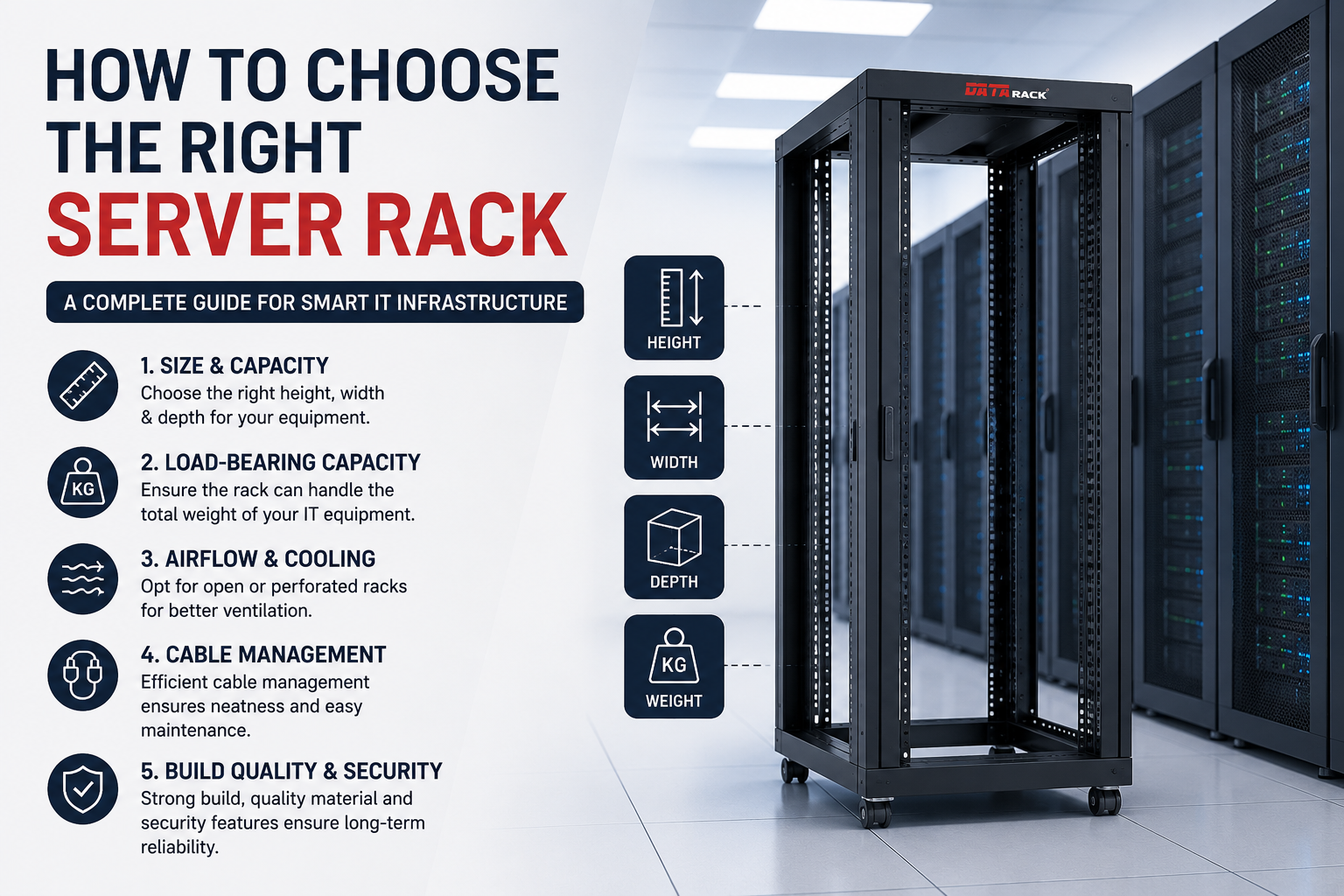
1. Rack Size and Height
Server racks are available in various sizes, typically measured in rack units (U). Common options include:
- 24U Server Racks
- 42U Server Racks
- 45U Server Racks
- Custom Rack Solutions
For AI and enterprise environments, 42U and 45U racks are often preferred because they maximize vertical space while supporting future expansion.
Before purchasing a rack, evaluate:
- Current equipment requirements
- Planned infrastructure growth
- Available floor space
- Cooling system design
Selecting the correct rack size helps avoid costly upgrades in the future.
2. Load-Bearing Capacity
AI servers equipped with GPUs and storage arrays can be significantly heavier than traditional servers.
When evaluating server racks, consider:
- Static load capacity
- Dynamic load capacity
- Equipment distribution
- Structural strength
A robust rack design ensures safe deployment while minimizing the risk of structural failures.
3. Airflow Management and Cooling Efficiency
Cooling has become one of the most important considerations in modern data centers.
Poor airflow can lead to:
- Overheating
- Reduced equipment lifespan
- Increased energy costs
- Unexpected downtime
When selecting a rack, look for features such as:
- Perforated front and rear doors
- Optimized airflow pathways
- Ventilation options
- Cable management systems that do not obstruct airflow
Efficient airflow management helps maintain stable operating temperatures and improves overall data center performance.
4. Cable Management Capabilities
As infrastructure grows, cable complexity increases dramatically.
Without proper cable management, organizations may experience:
- Maintenance challenges
- Airflow restrictions
- Longer troubleshooting times
- Increased risk of accidental disconnections
Modern server racks should include:
- Vertical cable managers
- Horizontal cable organizers
- Dedicated cable routing channels
- Easy access panels
A structured cabling approach improves operational efficiency and supports long-term scalability.
5. Security Features
Data centers house mission-critical equipment and sensitive information.
Organizations should prioritize server rack with:
- Lockable front and rear doors
- Secure side panels
- Controlled access systems
- Tamper-resistant designs
Enhanced security helps protect valuable infrastructure from unauthorized access and potential disruptions.
6. Scalability for Future Growth
Technology requirements continue to evolve rapidly. Businesses should select rack solutions that can accommodate:
- Additional servers
- Higher network density
- Increased power requirements
- Future AI workloads
Scalable rack designs allow organizations to expand efficiently without redesigning their entire infrastructure.
Common Mistakes to Avoid When Buying a Server Rack
Many businesses focus solely on immediate requirements and overlook long-term operational needs.
Common mistakes include:
Choosing the Wrong Size
A rack that is too small can limit future expansion and create unnecessary constraints.
Ignoring Cooling Requirements
Even high-performance equipment can fail if airflow is not properly managed.
Poor Cable Planning
Disorganized cabling creates maintenance challenges and negatively impacts airflow.
Overlooking Weight Capacity
Heavy AI servers require racks capable of supporting substantial loads.
Focusing Only on Price
The cheapest rack may result in higher operating costs, increased downtime, and premature replacement.
How it’s Design Impacts Data Center Efficiency
The design of a server rack directly influences multiple aspects of data center operations, including:
- Cooling performance
- Equipment accessibility
- Maintenance efficiency
- Space utilization
- Energy consumption
- System reliability
Organizations that invest in high-quality infrastructure often experience improved uptime, reduced operational costs, and better overall performance.
In today’s competitive digital environment, infrastructure reliability can be a significant business advantage.
The Role of Server Rack in AI-Ready Data Centers
As AI adoption accelerates across industries, infrastructure requirements will continue to evolve.
AI-ready data centers rack require:
- High-density server deployments
- Advanced cooling strategies
- Scalable architecture
- Reliable cable management
- Enhanced equipment protection
The server serves as the physical foundation supporting all these requirements.
Organizations preparing for AI growth should consider infrastructure as a strategic investment rather than a simple hardware accessory.
Why Choose Data Rack Technologies?
Data Rack Technologies provides innovative solutions designed to meet the evolving demands of modern IT environments.
Our solutions are engineered to support:
- Enterprise Data Centers
- AI Infrastructure Deployments
- Cloud Computing Environments
- Networking Applications
- Telecom Infrastructure
- Edge Computing Facilities
With a focus on durability, airflow optimization, cable management, and scalability, we help organizations build reliable and future-ready infrastructure.
Conclusion
The rapid growth of AI, cloud computing, and high-density data centers is reshaping infrastructure requirements across industries. Choosing the right server rack is no longer just about equipment storage—it is about ensuring performance, efficiency, security, and long-term scalability.
By considering factors such as size, load capacity, airflow management, cable organization, security, and future expansion, businesses can create infrastructure capable of supporting next-generation workloads.
As organizations prepare for the future of digital transformation, investing in the right rack infrastructure today can help ensure operational success tomorrow.
Explore Data Rack Technologies’ complete range of server racks and data center solutions to build a stronger, more efficient, and AI-ready infrastructure.