
Introduction of Artificial Intelligence
Artificial Intelligence is transforming industries worldwide, from healthcare and finance to manufacturing and e-commerce. As organizations increasingly adopt AI-powered applications, the demand for robust computing infrastructure continues to rise. Behind every model, machine learning algorithm, and real-time analytics platform lies a powerful data center capable of processing massive amounts of data.
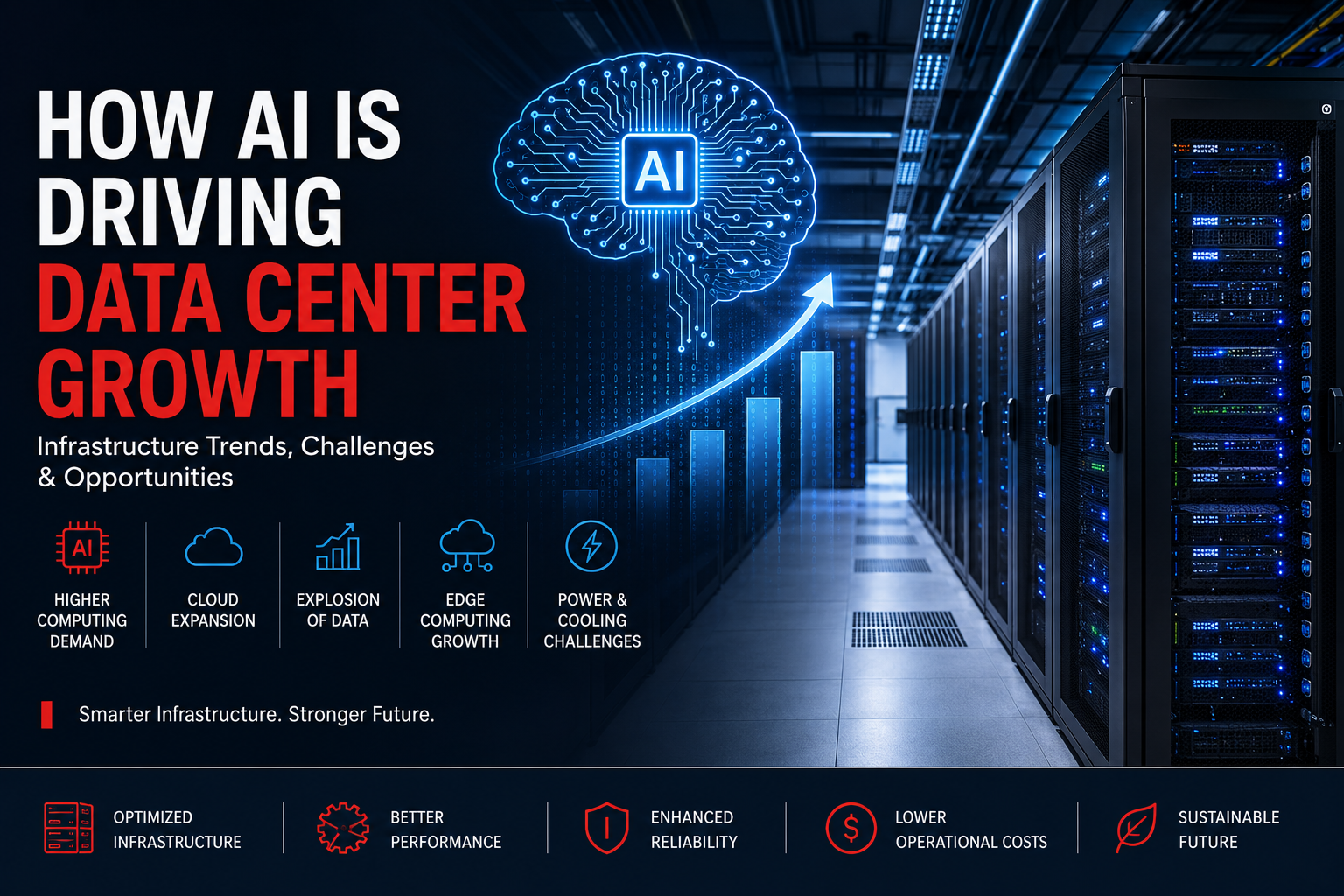
This growing reliance on Artificial Intelligence is driving unprecedented growth in data centers, creating new opportunities and challenges for businesses investing in IT infrastructure. In this article, we explore how AI is fueling data center expansion and why modern infrastructure solutions are becoming more important than ever.
The Rise of Artificial intelligence and Its Infrastructure Demands
Applications require significant computational power to process large datasets, train machine learning models, and deliver real-time insights. Unlike traditional business applications, Artificial Intelligence workloads demand:
- High-performance computing (HPC)
- Advanced GPUs and AI accelerators
- Increased storage capacity
- Faster network connectivity
- Efficient cooling systems
- Reliable power distribution
As organizations deploy more AI solutions, existing infrastructure often struggles to handle these growing requirements. This has led to increased investments in modern data centers designed specifically for AI workloads.
Why Artificial Intelligence Is Accelerating Data Center Growth
1. Increased Demand for Computing Power
To support these workloads, businesses are expanding their data center capacity with:
- High-density server racks
- Advanced networking equipment
- AI-optimized hardware
- Scalable storage systems
This trend is driving significant growth in both enterprise and hyperscale data centers worldwide.
2. Growth of Cloud-Based Artificial Intelligence Services
The result is the rapid construction of new data centers equipped with:
- High-capacity server racks
- Enhanced cooling technologies
These facilities form the backbone of modern AI-driven businesses.
3. Explosion of Data Generation
AI systems thrive on data. Every day, businesses generate massive volumes of information through:
- IoT devices
- Smart manufacturing systems
- Customer interactions
Managing and processing this data requires sophisticated infrastructure, leading to increased investments in storage, networking, and data center facilities.
4. Expansion of Edge Computing
This has accelerated the growth of edge data centers located closer to users and devices. These smaller facilities help:
- Reduce latency
- Improve application performance
As edge computing expands, the demand for compact, scalable server rack solutions continues to grow.
Challenges AI Creates for Data Centers
While AI presents significant growth opportunities, it also introduces new infrastructure challenges.
Power Consumption
Artificial Intelligence servers consume substantially more power than traditional IT equipment. Data center operators must invest in efficient power distribution systems and energy management solutions to support increasing workloads.
Heat Generation
Popular cooling approaches include:
- Hot aisle and cold aisle containment
- Precision air conditioning
- Liquid cooling systems
- Optimized airflow management
Rack Density
Modern AI hardware requires higher rack densities than conventional servers. Organizations need robust server racks capable of supporting heavier equipment loads while maintaining proper airflow and cable organization.
The Role of Modern Data Center Infrastructure
To meet AI-driven demands, businesses must invest in reliable infrastructure components, including:
Server Racks
High-quality server racks provide the foundation for organized and scalable deployments. Proper rack design improves:
- Equipment accessibility
- Airflow efficiency
- Cable management
- Space utilization
Structured Cabling
As AI environments become more complex, structured cabling helps maintain reliable connectivity and simplifies maintenance.
Power Distribution Units (PDUs)
Advanced PDUs ensure efficient power delivery to critical equipment while supporting monitoring and management capabilities.
Cooling and Airflow Management
Effective cooling solutions are essential for maintaining optimal operating conditions in high-density AI environments.
AI and the Future of Data Centers
Industry experts predict continued growth in AI adoption over the next decade. As organizations embrace technologies such as generative AI, machine learning, and predictive analytics, demand for advanced data center infrastructure will continue to increase.
Future trends are expected to include:
- Higher rack densities
- Increased use of liquid cooling
- Sustainable infrastructure solutions
- AI-powered data center management
Organizations that invest in scalable and future-ready infrastructure today will be better positioned to support tomorrow’s AI-driven workloads.
Conclusion
Artificial Intelligence is reshaping the digital landscape and driving unprecedented growth in data centers worldwide. From increased computing requirements and cloud expansion to edge deployments and massive data generation, AI is creating new demands for reliable, scalable, and efficient infrastructure.
As businesses continue their AI journey, investing in modern server racks, structured cabling, cooling systems, and data center infrastructure will be critical to achieving long-term success. A well-designed infrastructure foundation not only supports current workloads but also prepares organizations for the future of AI innovation.