How Digital Kiosks Improve Queue Management and Customer Satisfaction
Introduction
Long queues and extended waiting times can negatively impact customer experience and business efficiency. Whether it’s a retail store, hospital, bank, government office, or corporate reception, customers expect fast, organized, and convenient service.
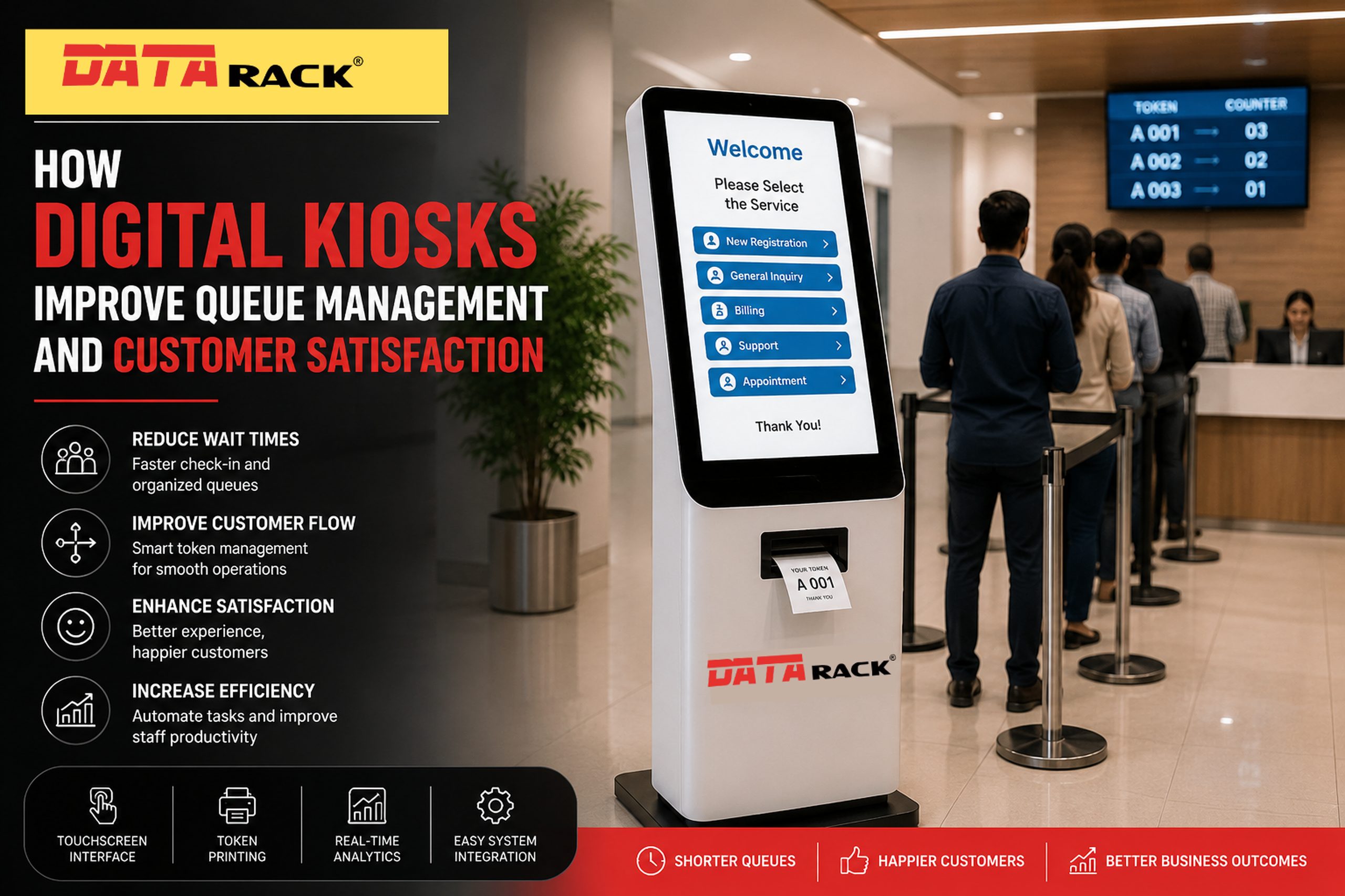
This is where digital kiosks have become a game-changer. By automating routine processes and streamlining customer interactions, digital kiosks help businesses reduce waiting times, improve operational efficiency, and significantly enhance customer satisfaction.
In this blog, we’ll explore how digital kiosks improve queue management and why they’re becoming an essential investment for modern organizations.
What Is a Digital Kiosk?
A digital kiosk is an interactive touchscreen terminal that enables users to perform specific tasks without requiring assistance from staff. Depending on the application, digital kiosks can be used for:
- Visitor registration
- Queue token generation
- Self-service check-in
- Bill payments
- Product information
- Ticket booking
- Appointment scheduling
- Feedback collection
- Wayfinding and navigation
These kiosks are commonly installed in retail outlets, hospitals, banks, airports, hotels, educational institutions, and government facilities.
Why Queue Management Matters
Poor queue management affects both customers and businesses.
Common challenges include:
- Long waiting times
- Confused customer flow
- Overloaded service counters
- Increased staff workload
- Customer frustration
- Lost sales opportunities
- Lower customer retention
Efficient queue management creates a smoother experience, reduces stress, and improves overall service quality.
How Digital Kiosks Improve Queue Management
1. Faster Customer Check-In
Digital kiosks allow customers to register themselves within seconds instead of waiting for manual assistance.
Customers can:
- Select the required service
- Enter their details
- Receive a queue token
- Wait comfortably until called
This minimizes congestion at reception desks and speeds up the entire process.
2. Organized Customer Flow
Instead of customers waiting in random lines, digital kiosks automatically assign queue numbers based on service type or priority.
Businesses can create separate queues for:
- General inquiries
- Premium customers
- Technical support
- Billing
- Appointments
- New registrations
This structured approach ensures smoother operations and reduces confusion.
3. Reduced Waiting Time
Digital kiosks automate repetitive administrative tasks, allowing staff to focus on more complex customer needs.
As a result:
- More customers are served in less time.
- Service counters operate more efficiently.
- Waiting times decrease significantly.
Customers perceive the service as faster, even during busy hours.
4. Real-Time Queue Monitoring
Modern queue management kiosks provide real-time insights into customer flow.
Businesses can monitor:
- Number of waiting customers
- Average waiting time
- Counter performance
- Peak business hours
- Service efficiency
These analytics help managers optimize staffing and improve operational planning.
5. Better Staff Productivity
When kiosks handle routine tasks like registration, token generation, and information collection, employees spend less time on administrative work.
This enables staff to:
- Resolve customer issues more effectively
- Increase service quality
- Reduce manual errors
- Improve response times
The result is a more productive workforce and a better customer experience.
6. Contactless and Self-Service Experience
Customers increasingly prefer self-service options that reduce physical interaction and waiting.
Digital kiosks support:
- Touchscreen navigation
- QR code integration
- Contactless check-in
- Digital ticket generation
- Online appointment verification
This creates a faster, safer, and more convenient experience.
How Digital Kiosks Improve Customer Satisfaction
Shorter Wait Times
Customers value quick service. A well-designed digital kiosk system helps reduce delays and creates a positive first impression.
Increased Transparency
Displaying queue numbers and estimated waiting times helps customers know what to expect, reducing uncertainty and frustration.
Improved Accuracy
Automated registration reduces manual data entry errors and ensures customer information is captured consistently.
Personalized Service
Advanced kiosks can identify returning customers and offer personalized options based on previous visits or appointments.
Better Accessibility
Digital kiosks can be designed with:
- Large touch displays
- Multi-language support
- Voice assistance
- Accessible interfaces
- Height options for wheelchair users
This ensures a better experience for a wider range of users.
Industries Benefiting from Digital Queue Management Kiosks
Healthcare
Hospitals and clinics use digital kiosks for patient registration, appointment check-in, and queue management, reducing crowding and improving patient flow.
Banking
Banks streamline customer service by issuing queue tokens and directing customers to the appropriate service counters.
Retail
Retail stores use self-service kiosks for product searches, order placement, loyalty programs, and customer support.
Government Offices
Government service centers manage high visitor volumes efficiently through automated queue systems.
Hotels
Hotels enable guests to check in, request services, and access information through interactive kiosks, reducing reception wait times.
Educational Institutions
Universities and colleges use kiosks for admissions, fee payments, information services, and visitor management.
Features to Look for in a Queue Management Digital Kiosk
When choosing a kiosk, consider features such as:
- Responsive touchscreen display
- Durable metal enclosure
- High-performance processor
- Secure locking mechanism
- Thermal printer compatibility
- Barcode and QR code scanner support
- Camera integration
- Remote management capabilities
- Easy software integration
- ADA-friendly design
- Reliable cooling and ventilation
Selecting the right hardware ensures long-term reliability and lower maintenance costs.
Future of Digital Queue Management
With advancements in AI, cloud computing, and IoT, kiosks are becoming even smarter.
Emerging capabilities include:
- AI-powered customer assistance
- Predictive queue optimization
- Facial recognition (where appropriate and legally compliant)
- Mobile queue notifications
- Cloud-based analytics
- Voice-enabled interactions
Businesses that invest in modern kiosk solutions today will be better prepared to meet evolving customer expectations.
Conclusion
Digital kiosks are transforming the way businesses manage customer interactions. By reducing waiting times, organizing customer flow, automating repetitive tasks, and providing a seamless self-service experience, they improve both operational efficiency and customer satisfaction.
Whether you’re managing a hospital, retail store, bank, educational institution, or corporate facility, implementing a kiosk solution can help create faster, smarter, and more efficient service experiences.
As customer expectations continue to rise, investing in reliable digital kiosk technology is no longer just an upgrade—it’s a strategic step toward delivering exceptional service.
Frequently Asked Questions (FAQs)
1. What is a digital queue management kiosk?
A digital queue management kiosk is a self-service terminal that allows customers to register, receive queue tokens, and wait for their turn in an organized manner.
2. Which industries use digital kiosks?
Digital kiosks are widely used in healthcare, banking, retail, hospitality, education, government offices, airports, and corporate environments.
3. How do digital kiosks reduce waiting times?
They automate tasks such as check-in, registration, and token generation, enabling staff to serve customers more efficiently.
4. Can digital kiosks integrate with existing software?
Yes. Many digital kiosks support integration with CRM, ERP, appointment scheduling, queue management, and visitor management systems.
5. Are digital kiosks suitable for small businesses?
Yes. Digital kiosks can improve customer service and operational efficiency for businesses of all sizes, from small retail outlets to large enterprises.